

The International Mediation Program is a comprehensive, practice-based online training designed for individuals who want to develop strong mediation skills grounded in Nonviolent Communication (NVC).
This year-long program supports you in becoming a confident and skilled mediator, capable of facilitating constructive dialogue and reconciliation in complex conflict situations.
Liv Larsson talks about her learnings in mediation
Program info and Q/A session recording from 18 aug
Who is it for?
For this program, we have found it helpful for people to have a foundation in Nonviolent Communication (NVC).
For this Mediation Program, we have found it helpful if you have:
Fluency with the OFNR communication components
Feelings & needs vocabulary
Live NVC training or private sessions (in person or online) with a experienced teacher
1-2 years or more of partner/group practice with NVC skills.
This program is is aimed at people who want to work with formal mediation or conflict work and/or people who want to informally in their work or private life be better att navigating conflicts. It is also a fast track to a more advanced lever of NVC practice or as a part of their NVC certification process.
We ask that participants have at least 30 days of prior NVC training before joining this program. Additionally, we recommend reading A Helping Hand: Mediation with Nonviolent Communication by Liv Larsson. The book is available in Swedish, German, Dari, Korean, Chinese, English, Dutch, Polish, and Finnish.
If you believe you can benefit from this training without the recommended 30 days of NVC experience—for instance, if you work as a mediator or have relevant experience—please contact us before applying. Together, we’ll determine if this program is the right fit for you.
Purpose of the Program
The program is designed to help you:
-
Facilitate respectful and constructive dialogue between parties in conflict
-
Strengthen your ability to remain present and grounded in emotionally charged situations
-
Develop clarity, empathy, and neutrality in mediation
-
Deepen your self-awareness and professional capacity as a mediator
-
Work effectively with complexity, strong emotions, and relational dynamics
The training combines theory, live demonstrations, structured practice, and feedback to ensure practical integration of mediation skills.
Program Structure
The program is designed to build your mediation skills progressively:
76h Trainer-Led Sessions:
We start by introducing and demonstrating specific, concrete skills. These sessions lay the foundation for your practice and integration. As the program advances, these skills will be applied with increased mediator awareness and flexibility. All trainer-Led Sessions will be offered twice and as recordings if you for any reason can't join a session.
75h Integration Group sessions:
In small groups of 3-5 participants, you will regularly practice skills in realistic scenarios. These cases will increase in complexity and duration, starting with brief 1-minute exercises and progressing to comprehensive situations. You’ll apply multiple skills and navigate the 5-step mediation map.
Additional Topics:
We’ll explore key areas to deepen mediator awareness, including:
Mediator self-care
Key differentiations
The impact of shame on conflict
Building trust
Perspective-taking
Understanding Adult development
As the program evolves, your practice will shift from concrete actions to more subtle, nuanced awareness in your role as a mediator. Dates for the sessions you find below
Training Structure
-
Start: The program kicks off with trainer-led sessions to establish a solid foundation.
-
Practice Groups: You’ll join small integration groups for structured practice, a central element for integrating mediation skills.
-
Ongoing Learning: The training alternates between practice periods and presentations of advanced mediation concepts.
-
Final Phase (Summer 2027): During this period, your small groups will design their own practice schedules. You can film mediation sessions for feedback and receive guidance on areas for improvement.
Recommended Reading
The training is partly based on the book by Liv Larsson A Helping Hand Mediation with Nonviolent Communication (available in Swedish, German, English, Dari, Dutch, Polish and Finnish). We recommend you to read the book as part of your preparation for the training.
Included Resources
-
Workbook (PDF): A structured guide to support learning and practice. 2026/27 edition
-
E-Book: A Helping Hand, Mediation with NVC by Liv Larsson.
-
E-Book: Cracking the Communication Code by Katarina Hoffmann & Liv Larsson.
Our Approach
This program is most effective for those who are willing to embrace the process of learning through trial, error, and feedback. Progress requires effort, persistence, and a growth mindset. Perfection is an moving target, but with commitment, most people can master these skills.
What you will learn
This program is an invitation into the art of mediation from a relational and context-aware perspective — where understanding is co-created, meaning is shaped in dialogue, and human dignity remains central. Throughout the training, you will not only learn what to do as a mediator, but also how to be in the presence of conflict.
Below is an overview of the journey you will take.
Entering the Practice of Mediation
We begin by creating a shared foundation. You will be introduced to the group, the structure of the program, and the core principles of mediation as a relational practice. Together we explore the mediation map — a living orientation that helps you understand where you are in a process and what may be needed next.
You will gradually build your own mediation toolbox, grounded in Nonviolent Communication (NVC) and enriched by systemic and restorative perspectives.
The Mediator’s Toolbox
At the heart of the training is the development of your inner and outer capacities as a mediator.
You will learn the art of empathic presence — listening beyond sympathy, beyond fixing, into deep human understanding. From there, you will practice supporting parties in learning how to listen to one another with empathy.
You will develop the skill of interrupting with care, stepping in when necessary while protecting dignity and autonomy. You will also learn “first-aid empathy” — how to stabilize a conversation when emotions intensify and the process feels fragile.
Equally important is your relationship with yourself. You will practice self-empathy and self-expression, learning how to stay internally connected so you can serve others without losing yourself. You will strengthen your ability to track what truly matters in a dialogue — the needs, the shifts, the emerging openings for movement.
Deepening Clarity and Choice
Conflict often narrows perspective. In this program, you will work with key differentiations that bring clarity to complex situations and open up new possibilities for choice.
You will explore how to build and rebuild trust, how to work constructively with resistance, and how to support autonomy rather than compliance.
You will also learn the subtle art of informal mediation — when to intervene, how to step in naturally, and how to recognize opportunities for transformation in everyday interactions.
For formal mediation settings, you will gain structure and confidence in how to open a process, guide it toward agreements, and close it with clarity, including defining next steps and sustainable solutions.
Practicing in Real-Life Complexity
Learning happens through practice. You will mediate in a variety of contexts, using real-life examples and thoughtfully prepared scenarios. You will explore restorative and reconciliation practices, and discover different variations of NVC-based mediation.
Special attention is given to challenging situations. You will learn how to mediate when:
-
Shame is present and unspoken
-
Someone withdraws into silence
-
Anger escalates
-
A person turns against themselves
-
Rebellion or strong self-sufficiency blocks connection
You will also receive feedback on recorded mediations, supporting you in integrating your learning with depth and precision.
Understanding the Inner Landscape of Conflict
Conflict is not only relational — it is also deeply internal. You will explore processes that illuminate what happens beneath the surface, including:
-
The role of shame in mediation
-
The Compass of Needs as an orienting framework
-
Working with judgments, labels, and enemy images
-
Understanding inner doubt, fear, and anger
Through guided processes such as the Enemy Image Process, the Inner Chooser, and the Inner Educator, you will expand your capacity to hold complexity — both in yourself and in others.
Sustaining Yourself as a Mediator
To accompany others in conflict requires care. Throughout the program, you will practice mediator self-care — individually, in pairs, and in group settings.
You will learn how to build empathy support structures for ongoing challenges and how to process difficult emotional experiences that arise in mediation work.
This training recognises that sustainable mediation is not about perfection. It is about presence, humility, and the courage to remain human in the midst of tension.
By the end of the program, you will not only have gained practical tools and structured models — you will have developed the capacity to navigate complexity with relational intelligence and reflective awareness. Mediation becomes a living, participatory process in which meaning is continuously shaped through dialogue. Rather than positioning yourself as someone who fixes problems, you learn to host conversations where multiple perspectives can coexist, dignity is restored through mutual recognition, and new possibilities emerge from within the system itself.
In this way, mediation is not about arriving at one “right” story, but about expanding the field of understanding so that more life-affirming narratives and choices can take form.
Dates: 2026 - 2027
Starts October 6
Trainer-Led Dates and Practice Times
-
All sessions are trainer led
-
Integration group practice takes place in small, self-organized groups. Trainers lead the initial sessions to provide guidance and ensure a strong start.
-
Every session is recorded, and you’ll have access to the recordings throughout the program.
-
📆 Download a calendar file for all the dates
Teacher led session 1: 6 October 17:00 - 21:00 CEST (Stockholm time) Integration Group 1: 13 October 17:00 - 20:00 Teacher led session 2: 20 October 17:00 - 21:00 Integration Group 2: 27 October 17:00 - 20:00 Teacher led session 3: 3 November 17:00 - 21:00 Integration Group 3: 10 November 17:00 - 20:00 Integration Group 4: 17 November 17:00 - 20:00 Teacher led session 4: 24 November 17:00 - 21:00 Teacher led session 5: 1 December 17:00 - 21:00 Teacher led session 6: 8 December 17:00 - 21:00 Teacher led session 7: 15 December 17:00 - 21:00 Integration Group 5: 22 December 17:00 - 20:00 Integration Group 6: 5 Januari 17:00 - 20:00 Teacher led session 8: 12 January 17:00 - 21:00 Teacher led session 9: 19 January 17:00 - 21:00 Teacher led session 10: 26 January 17:00 - 21:00 Integration Group 7: 2 February 17:00 - 20:00 Integration Group 8: 9 February 17:00 - 20:00 Integration Group 9: 16 February 17:00 - 20:00 Teacher led session 11: 23 February 17:00 - 21:00 Teacher led session 12: 2 March 17:00 - 21:00 Teacher led session 13: 9 March 17:00 - 21:00 Teacher led session 14: 16 March 17:00 - 21:00 Integration Group 10: 23 March 17:00 - 20:00 Integration Group 11: 30 March 17:00 - 20:00 Integration Group 12: 6 April 17:00 - 20:00 Teacher led session 15: 13 April 17:00 - 21:00 Integration Group 13: 20 April 17:00 - 20:00 Integration Group 14: 27 April 17:00 - 20:00 Integration Group 15: 4 May 17:00 - 20:00 Integration Group 16: 11 May 17:00 - 20:00 Integration Group 17: 18 May 17:00 - 20:00 Integration Group 18: 25 May 17:00 - 20:00 Teacher led session 16: 1 June 17:00 - 21:00 Teacher led session 17: 8 June 17:00 - 21:00 Integration Group 19: 15 June 17:00 - 20:00 Integration Group 20: 22 June 17:00 - 20:00 Integration Group 21: 29 June 17:00 - 20:00 Integration Group 22: 6 July 17:00 - 20:00 Integration Group 23: 3 August 17:00 - 20:00 Integration Group 24: 10 August 17:00 - 20:00 Integration Group 25: 17 August 17:00 - 20:00 Teacher led session 18: 24 August 17:00 - 21:00 Last Teacher led session 19: 31 August 17:00 - 21:00
3 steps to get started
STEP ONE — PREREGISTER Please preregister, even if you're unsure about attending. No obligation required.
STEP TWO — REGISTER AND PAY After pre-registering, you’ll receive instructions on how to complete your registration and payment.
Price: €3,995
Payment options: If you wish to pay in instalments, we’re happy to support that.
Please email us at and let us know that you’d like to arrange a payment plan.
STEP THREE — DETAILS Once your payment is processed and starting date gets closer you will receive log in info and access to the program platform.
Cancellation Policy:
At step 2, you reserve a seat in the program. You may cancel your reservation to 30 days before the program start date with a fee of 250€. Cancellations made less than 30 days prior to the start date will incur a charge of 50% of the program fee.
Cancellations made after the program has started are non-refundable, as these funds cover the trainer team's salaries and administrative costs for the program duration.

Liv Larsson

Reena Ginwala

Kay Rung
Trainer team
is Certified Trainer with CNVC since 2002. She has worked as a coach, mediator and workshop leader since 1992. Liv has written 20 books on the theme of NVC, for adults and children, translated to different languages. The titles include Anger Guilt and Shame - Reclaiming Power and Choice, A Helping Hand- Mediation with Nonviolent Communication and Cracking the NVC Code - all of them useful for a mediator.
She lives in the north of Sweden and one of her contracts as a mediator is for Swedish FSC - Forest Stewardess Council - mediating between the indigenous group of Sweden - the Same - and the biggest forest companies in Sweden as well as mining companies.
Liv has been sharing her special way of teaching mediation skills to many different groups - from UN mediators to social workers and parents and has been leading mediation trainings in Australia, Europe and Asia. One of here special skills and areas of interest is how shame is affecting both the mediator and the parties in a mediation. Her passions are cross-country skiing, hiking, swimming, yoga, nature, her son, writing and connecting with people.
has been working with Nonviolent Communication since 1997. He has developed a specific pedagogical model to teach mediation with NVC as an approach. He is in charge of Friare Liv longer training programs. His is intrested in creating maps for navigating conflicts with more ease. He works internationally with conflict management and mediation, including in Japan, Thailand, Australia, India, Sri Lanka and Europe.
Reena Ginwala:
Reena Ginwala is a CNVC certified NVC trainer with experience sharing NVC across corporates, educational institutions, NGOs since 2014. She learnt about Mediation from the Indian Judicial context through her own life experiences of divorce, conflicts in business and family settings. She is passionate about Empathy based Restorative processes and NVC integrated Mediation. She teaches Mediation to professionals from diverse background at the Mumbai National Law University, India and has been associated with us since last 4 years learning, supporting and facilitating Mediation training.
Assistant team
The assistant team is a great resource for you as a participant they have a long history in practicing NVC and have all done the program at least once. They supports the learning and practice with everything from technical stuff, taking part in exercises and helping out with mediation demos.

Julia Shen
![IMG_20220828_162819[735]_edited.jpg](https://static.wixstatic.com/media/0409fa_683698e6b0074aa6b25345c2ff7334cd~mv2.jpg/v1/fill/w_287,h_323,al_c,q_80,usm_0.66_1.00_0.01,enc_avif,quality_auto/IMG_20220828_162819%5B735%5D_edited.jpg)
Jenny Sjöstrand

Gonca Fide
Kola Mariusz
Assistents:
Gonca Fide, is a CNVC certified trainer, sharing NVC since 2017, living in Türkiye. As a Sociologist she worked in international rural development, nature conservation projects and as Social Impact Specialist in energy projects for 15 years. She visited over 100 villages in Anatolia in her professional career and observed that people had more similarities than differences and they are experiencing disagreements because of the lack of knowledge on how to shift their perspectives. It has always been her personal curiosity to learn skills to resolve conflicts and form agreements. She has participated in the Mediation Program 2020-2021. Now she is enjoying sharing NVC through various workshops and offering her mediation skills.
Jenny Sjöstrand has studied NVC for a decade, initially related to the private sphere and to her work as a teacher. Lately she is widening her perspective, opening up to conflict resolution on the international arena, doing Peace Studies and International Law.
Jenny attended the mediation programme in 2023. “I enjoy the hands-on quality of the NVC approch to mediation, balancing the theoretical contxt I am in”.
Julia Shen is a certified NVC trainer and NVC-based mediator who works with individuals, teams, and organizations to strengthen communication, collaboration, and conflict resolution. With over a decade of experience in operations program management in the tech industry, she brings a practical perspective to organizational work. Julia participated in the Mediation Program from 2024–2026. Born and raised in China, she has lived in Toronto, Canada for over 20 years and works in both English and Mandarin.
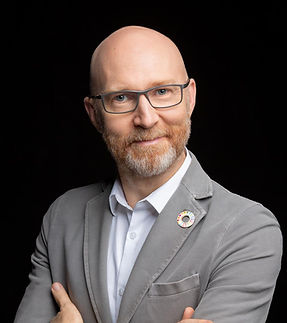
Kola Mariusz Kosla is an experienced manager with 25 years of leadership in large organizations, bringing a practical perspective shaped by years of work and life experience. Over the past six years, he has been studying and practicing NVC, developing skills in empathy and dialogue. He completed a mediation school in Poland and participated in the Mediation Program from 2024 to 2026. He speaks Polish, German, and English, and is learning Chinese with great enthusiasm—though with less great progress.
Help us train more mediators
We have people who want to join our mediation program and can not pay the full tuition.
If you want to support us in training more mediatiors you can contribute with a donation.
When you fill in the donation form we will email you a payment link that you can pay with card or PayPal.
This is much appreciated, thank you!
The mediation trainer team